921 Earthquake Museum of Taiwan
At 1:47 in the morning of September 21, 1999, a strong earthquake of 7.3 in the central part of Taiwan occurred, causing casualties and property losses as one of the biggest earthquake disasters in Taiwan in the past 100 years. In order to remind the public to pay attention to earthquake prevention and disaster relief measures, after the September 21 earthquake, the government and scholars and experts believed that the faults in the Guangfu National Base in Wufeng Township, the collapse of school buildings, the rise of riverbeds, and other landforms are the best in several candidate locations. The landform was preserved intact after the earthquake. It is convenient to restore the existing site in the country and plan to rebuild the "Earthquake Memorial Museum" to preserve the original site of the earthquake, record the history of the earthquake, and provide the public and the school's living materials on earthquake education. It was officially named "921" on February 13, 2001. An earthquake museum to highlight its commemorative and educational significance.

Museum hours are 9:00 am to 5:00 pm
Ticket offices are open from 9:00 am to 4:30 pm

The museum is closed on Monday (except national holidays)
Lunar New Year's Eve
The first day of the Lunar New Year
The necessary closing date for the announcement by the museum.

09:00 - 17:00
09:00 - 17:00
09:00 - 17:00
09:00 - 17:00
09:00 - 17:00
Closed
09:00 - 17:00

| General | NT $50 |
| Group of 20 or more, Students (with valid certificates) | NT $30 |
| Student (6-12 years) | NT $25 |
| Student aged 12 and above with valid student ID | NT $30 |
| Seniors aged 65 and above with certificates (Holidays & Weekends) | NT $25 |

| Children aged under 6 | Free |
| Seniors aged 65 and above (weekdays only) | Free |
| Visitors with Museum Dinosaur Cards | Free |
| Visitors with disabilities and one accompanying person | Free |
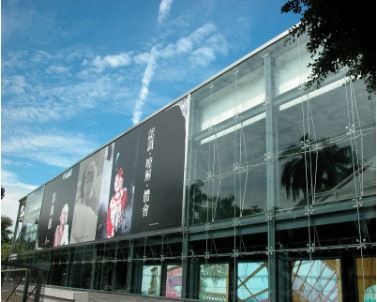
When you are about to step out of the Chelungpu Fault Memorial, take a look back at this beautiful exhibition hall. The building embraces a novel and unique architectural design featuring a linear configuration to symbolize stitches for healing the wound of Earth and present a sequential spatial structure that converges the incident of 921 earthquake. The entire building is free of post-and-beam system but constructed with 82 precast, and prestressed concrete slabs, each 12m high, 2.4m wide and weighing 10 tons.
The building is in arc shape with a complex composition. In the process of its construction, the unconventional working methods employed and difficulties encountered in surface treatment, hoisting, assembly, installation or foundation were unprecedented. The building was grand opening on September 21, 2004. The same year it also had been nominated for the Far East Architecture Award and won the Taiwan Architecture Award. Furthermore, it won the WA Chinese Architecture Award in 2006.
This building can be divided into a classroom area for studying damage and an exhibition area. The exhibition area was planned and developed by the National Center for Research on Earthquake Engineering and features houses that are safe in design and construction, how modern buildings minimize the effects of earthquakes, and earthquake safety in public areas.
It is laid out in the style of a laboratory with many different interactive displays that allow the visitor to be involved in learning about earthquakes and to experience some of the principles behind earthquakes. Fun Corner in this gallery provides a unique learning space targeted at preschoolers and young children aged 3-10 years old. It creates a fun, stimulating and vivacious environment for children to learn structure and engineering. Toys, games, sketchbooks and scientific teaching aids featuring mechanics or physics help children develop logical thinking and concept of architecture. The damage education area contains some of the remnants of Wufeng Township’s Kwangfu Junior High school to give visitors an idea of the massive scale of destruction that earthquakes can bring, and to see the tremendous effect an earthquake can have on older school buildings in Taiwan.
Using the Image Gallery that was originally built in the Guangfu National Activity Center, the 921 earthquake-related photos and audio-visual materials were assembled, and the memories of the 921 earthquake in people's minds were truly presented from the perspective of human society and historical records. Through various exhibitions, the audience can browse the scene after the 921 catastrophe, collapsed buildings, rescue the victims, Taiwanese people help each other and carry out reconstruction work.
The three major theaters in the Image Gallery: The True Love Earth Theater, the Earthquake Experience Theater each have their own characteristics and the meaning behind them. By enjoying these audio and video materials and personal experience, people can feel the shock and reconstruction hope of the earthquake.
At 01:47 am on September 21, 1999, Taiwan experienced its largest earthquake in 100 years. The earthquake not only leveled buildings and houses over a wide area of central Taiwan, it also revealed a glaring lack of preparedness and prevention on the part of the people of all of Taiwan. It showed that rescue agencies were not ready, and people did not know what to do in the case of a disaster.
Taiwan’s location and geology mean that natural disasters are certain to happen from time to time, including earthquakes, typhoons, rockslides and other calamities, and preparation can never be overlooked. In the past, people said “Forewarned is forearmed.” It point out the importance of disaster prevention. Prevent the possible disaster and getting ready for it far outweighs the value of repair afterward. It is the objective of Disaster Prevention Hall. The goal of the gallery is to give knowledge of refuge and rescue, and related information to the audiences, to establish the correct concept of the disaster prevention.
The Reconstruction Record Hall collected documents of many organizations' efforts to rebuild after the 921 earthquake in the Republic of China in 1999. The museum was set up for free admission. On the occasion of the 10th anniversary of the 921 earthquake, we designed five themes to echo the theme of the pavilion, “Improving the future”, to show the government and civil society after the 921 earthquake. The result of reconstruction.
No.192, Xinsheng Road, Wufeng District, Taichung City
Address: No. 192, Xinsheng Road, Wufeng District, Taichung City, Taiwan Open Time: Tuesday to Sunday 9:00-17:00, closed on Mondays
Tel: 886-4-23390906, Fax: 886-4-23397401
Email: 921ser@nmns.edu.tw

Driving on the National Highway No. 3, exit at 211k Wufeng Interchange, turn right at the end of the exit ramp.

- General vehicles please park in the Parking Lot.
- Wheelchairs and baby strollers please use Disabled Parking.

From the Taichung High Speed Rail Station: take the High Speed Rail shuttle bus No. 151 (Taichung City Council→ Chaoyang University of Technology )and get off at the Kengkou Village(Guangfu Community) stop and walk along Xinsheng Road for 10~15 minutes to reach the museum.